
'We Need to Protect Players' - How Can Professional Tennis Steer Clear of Hitting a Breaking Point?
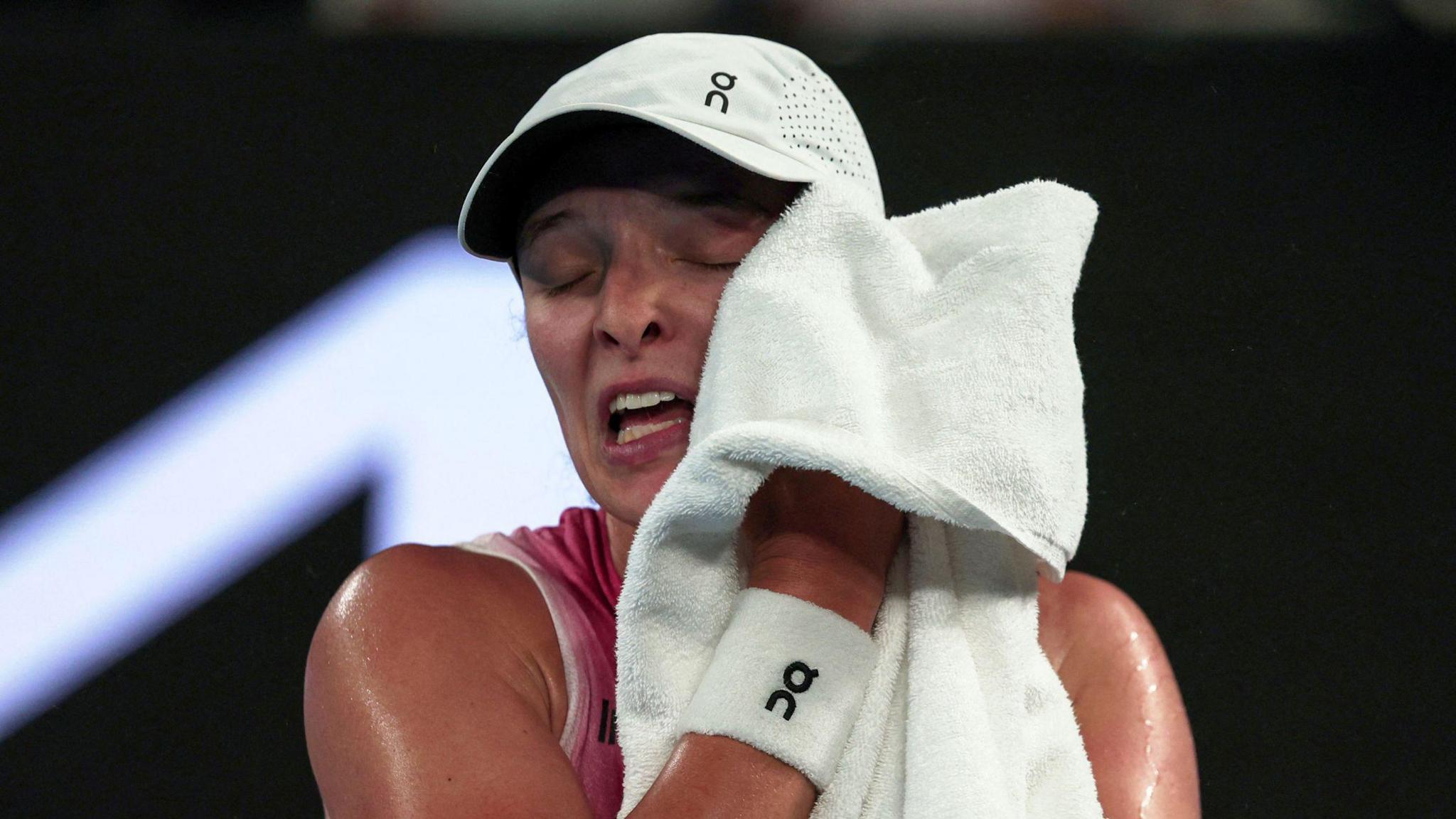
Grand Slam winner Iga Swiatek commented in September that she considers the season is "too long and too intense."
After Daria Kasatkina cut short her 2025 season early in October, the former world number eight explained how she had "reached her limit."
"The itinerary is excessive. Mentally and emotionally I'm at breaking point, and, unfortunately, I'm not alone," she stated.
Elina Svitolina of Ukraine, a former Wimbledon final four contender, had previously announced she was not in "the psychological condition" to persist, while reigning Grand Slam champions Iga Swiatek and Carlos Alcaraz furthermore believe the calendar is too long.
This issue remains under discussion as the world's top tennis players assemble once more in Australia for the start of the 2026 season.
A slightly longer off-season than 2025 has been received well. However, a few weeks is not seen as sufficient time for proper recuperation before work commences for an season lasting nearly a year seen as among the most demanding in professional sport.
"The physical requirements of tennis are more intense than in the past," commented Dr. Robby Sikka, medical director at the Professional Tennis Players' Association (PTPA).
"The duration of play has increased, players are faster, they're hitting the ball harder.
"We owe it to our players to protect them and give them a more sustainable sport."
So what is being done and what next actions could be implemented?
Reducing the Calendar Length
The 2025 season lasted 47 weeks for many players on the ATP circuit, commencing with the United Cup team event in late December 2024 and ending with the Davis Cup final in late November.
The women's season concluded two weeks earlier when the WTA Finals wrapped up in early November. The governing body moved the Billie Jean King Cup Finals forward to September to alleviate scheduling concerns.
ATP officials claim it does not take the concerns of the players "casually," while the WTA Tour says player welfare will "perpetually be the highest focus."
That did not placate the PTPA, which commenced proceedings against the men's and women's tours in March, citing "unfair practices and a clear neglect of athlete well-being."
Revamping the calendar is an apparent fix but cannot be accomplished simply given the complicated structure of tennis governance, where the four Grand Slams, ATP, WTA, and ITF each have significant influence.
"We need to think about whether we can create more time at the end of the year for an more substantial rest period, or can we create space during the season so there is a short hiatus," added Dr. Sikka.
Former world number one Andy Roddick, a vocal proponent of reform, says the season should not go past 1 November.
The ATP Tour has cut the number of events which factor into the rankings for 2026, which it is confident will diminish "the total burden" on the players.
"An aspect commonly missed: players select their own tournament plans," remarked ATP chairman Andrea Gaudenzi.
"That freedom is rare in professional sport. But with that comes responsibility - knowing when to push and when to recover."
Extending several required events across a fortnight - creating so-called 'mini Slams' - has also been faulted.
"I believe competitors are more worn out mentally and physically because they're spending more days away," said Britain's former men's world number one, Andy Murray.
In addition to mental burnout, there are concerns about the increased physical demands.
Players suffer more severe upper-body injuries in specific periods, according to PTPA research.
The organization says these "foreseeable patterns" are down to the structure of the calendar and the turnarounds between court surfaces.
Minimizing Midnight Matches & Uniform Balls
When a memorable contest at the Australian Open concluded in the early hours in 2023, it promised to spark change.
In 2024, the tours brought in a new rule prohibiting matches starting after 11pm.
But there have still been instances of matches ending deep into the night - which medical experts cannot be allowed to be "romanticised".
"Once the final point is played, a player's duties continue," said Dr. Sikka.
"Media interviews, rehabilitation, and treatment are required. Your day doesn't end at midnight.
"Your body, brain and nerves don't have chance to recover. This is a unique demand in the sporting world."
Studies show a player is 25% more likely to be injured during a night-session match.
The use of varying balls at different events - leading to changes in feel and performance - has been pointed to as a source of increased upper body injuries.
"I've had a lot of injuries in my arm, my shoulder, my wrist," commented one top British player, "and I'm seeing more and more of these injuries across the tours."
A former US Open champion, who ended his career last year with an ongoing wrist injury, argues tournaments in the same swing should use one type of ball.
"Implementing this would not be overly complex - the same ball for clay, the same for hard and the same for grass. That would be extremely beneficial to the players," he said.
The tours began using a more centralized ball-selection system during 2025 and project "full alignment" in the coming years.
Emulate American Sports & Safeguard Juniors
Medical researchers believe tennis must take cues from how American team sports use data to direct the welfare of its stars.
Based on data-led analysis, the NFL demanded consistent playing surfaces and improved helmet technology to reduce the risk of injury.
"The league has altered its regulations using concrete research," said an analytics expert whose firm provides data to monitor player welfare.
"The financial returns have increased dramatically because their games are so competitive and they're maintaining a healthy roster.
"They're putting their money where their mouth is by protecting athletes and allocating major funds – that model is the benchmark."
Other leagues have enacted regulations aimed at protecting specific positions, limiting their throws at the professional level and putting limits for young players.
Some retired players believe the strain put on the upper body of tennis players from a tender age is a significant factor in their injuries later on.
"We pick up a racket as kids and have so many iterations of our groundstrokes," said the former champion.
"Eventually, the wrist bears the brunt. Way more players have problems with the wrist. I think the problem is the many, many repetitions."
Athletes Are Pushing for Reform - What Are Their Demands?
An growing group of players are becoming vocal about the demands placed on them.
Current world number ones are among a group of stars ramping up pressure on the Grand Slams with calls for a increased portion of tournament income, as well as substantive discussions about the tour schedule duration, elongated tournaments and match timing.
Last year, a top-ten American player said it was "absurd" he was only able to take one week off before the upcoming tour.
Support is not always forthcoming, though, given top players also participate in lucrative showcase matches.
One Grand Slam champion from Britain says the daily routine is a "test" but thinks top players "moaning about the calendar" is not a good look.
"{Uniform