
While The Sudanese Nation Burns, Professional Basketball's Embrace of the UAE Shows How Sports Enables Human Rights Abuses.
During militia fighters from the brutal Rapid Support Forces (RSF) overrunning the largest city in Sudan's western region – perpetrating mass executions, rapes and targeted violence with weapons reportedly provided by the United Arab Emirates – the National Basketball Association's annual Emirates NBA Cup tipped off on October 31st, with sponsorship from the identical Middle Eastern nation.
A Deepening Alliance During Conflict
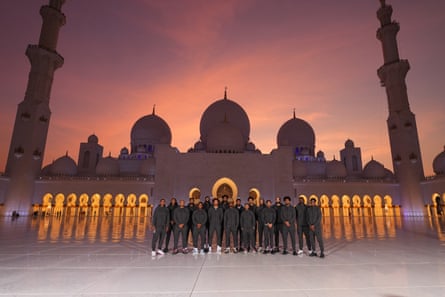
This event represents the clearest illustration of the NBA’s expanding relationship with the UAE – a partnership that encompasses annual preseason games in Abu Dhabi, a lucrative sponsorship deal with Emirates airlines, and plans for a proposed NBA Global Academy at an educational campus in Abu Dhabi.
Larger deals could follow. Reports indicate the NBA is seeking Emirati funding in a proposed NBA-branded basketball competition, which might begin as early as 2027.
This flourishing relationship has proven beneficial for each party: the league has gained a deep-pocketed backer, while the UAE has identified a cooperative ally to help further normalize its authoritarian government, particularly as it confronts allegations of fueling atrocities in Sudan.
The Emirates' Controversial Record
Underneath its façade of opulence and progress, the UAE enforces silence with an iron fist. Critics and human rights advocates are imprisoned on trumped-up accusations, punished for challenging the state. The country's economic prosperity rests on foreign workers, who make up a vast majority of the labor force and who toil with few rights and minimal options against exploitation.
The UAE’s role extends into more violent conflicts abroad. A mounting collection of reports connects the Emirati government to Sudan’s RSF, the armed group responsible for many of the horrors and crimes against humanity being committed in Sudan.
The Horrors of Sudan's Conflict
Sudan’s civil war started in April 2023, when tensions between the national army and the RSF thrust the country into a state of full-scale warfare. Cities such as the capital Khartoum were became war zones, destroying essential services and creating the most severe displacement crisis.
As the civil war entering its third year, casualty figures vary widely. Humanitarian organizations have documented thousands of confirmed deaths. Separate studies claim the toll may be significantly higher, with tens of thousands killed as a direct result the fighting.
The civil war has also been characterized by appalling acts such as sexual violence, abuse, mutilation and targeted persecution. This was further underscored when a key stronghold in Darfur fell to the RSF. The fighters embarked on a mass killing spree so extreme that images of the violence could be seen from satellite imagery.
Since the start of the conflict, the UAE have reportedly financed and equipped the paramilitary group, thereby supporting the its atrocities. Sudan’s military government have even brought a case to the International Court of Justice accusing the UAE of genocidal complicity. In spite of significant proof to the opposite, the UAE persistently rejects any role in the conflict.
Sportswashing and Global Apathy
Recently, the UAE has hosted major sporting events in a sport, basketball, mixed martial arts, and motorsport. Next come a golf championship and a padel tournaments. Apart from a few instances, teams and leagues have made little effort to dissociate from the controversial nation.
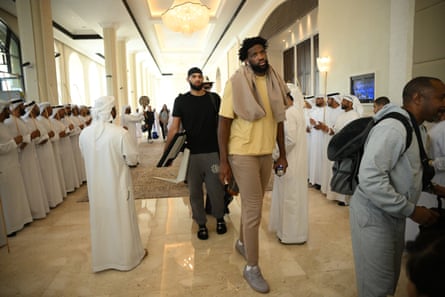
The UAE has gained significantly from the sports world’s inaction. Financial stakes in soccer teams, cricket, and other ventures have recast the leadership as savvy investors rather than ruthless autocrats.
And yet, the ongoing massacre in Darfur has provoked some rare bad publicity for the UAE. Some supporters have publicly criticized their team's backer for his country’s role in the Sudan conflict.
A Call for Responsibility
The lack of outcry around the NBA’s new partnership with the UAE is troubling. Among the handful to call out the NBA for legitimizing the UAE’s role is a humanitarian organization that champions the rights of refugees. Their message read: “The tournament should highlight the positive aspects in everyone. Yet, it’s being used to whitewash atrocities supported by the UAE in Sudan. The NBA shouldn’t let itself to be a pawn in the UAE’s normalization of human suffering.”
Nevertheless, sports teams and leagues rarely sever profitable agreements without resistance. At a European soccer giant's annual meeting, an activist who once spearheaded a successful campaign to end a similar partnership with a different Gulf state was heckled by attendees after voicing objections about a fresh deal with the UAE’s airline.
The activist accused the club of “buttressing the image of sketchy political regimes” and cautioned that the deal risked causing “long-term harm to the standing of our club”. For his remarks, he was ridiculed by the club’s chief executive.
This incident further emphasizes how successful the Gulf state’s brand management efforts have been, making criticism seem out of place even within famous clubs.
A Final Reflection
It is unlikely the NBA, which also maintains partnerships with additional controversial regimes, to publicly address the UAE’s conduct … but imagine if they did. What if mass atrocities, violations of international law and systemic repression were unacceptable conditions for global sports.